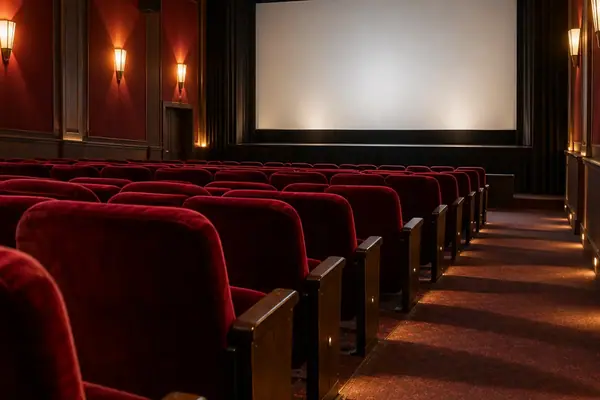
How Individual Films Become a Festival Slate
Festival programming is the structured process of evaluating film submissions and assembling them into a cohesive public exhibition schedule. Every selection occupies finite screen time. Its place depends on artistic quality, its relationship to other films, and the practical conditions of presenting it to an audience.
That changes the frame around a finished film. Production concentrates attention on the integrity of an individual work: its performances, images, structure, and directorial choices. Programming widens the view. A formally adventurous documentary might extend a slate’s range, while another accomplished film might revisit a subject already represented. Both judgments can coexist with genuine admiration for the filmmaking.
Selection is relational. Programmers ask what a film brings into conversation with the work around it.
Between the close of submissions and the final festival calendar, the process moves through several linked decisions:
- Verify eligibility and assign submissions to the appropriate categories.
- Evaluate films and develop a shortlist through comparative discussion.
- Build screening blocks and issue invitations.
- Confirm premiere status, exhibition materials, and venue suitability.
- Lock the screening order and public schedule.
These decisions remain connected. A changed premiere claim can affect an invitation; an exhibition problem can affect a venue assignment. The finished slate must hold together artistically and operationally.
From Submission Checks to Programming Committee Debate
The first review concerns eligibility. Intake checks whether an entry meets the open call’s requirements, includes the required materials, and belongs in its submitted category. Resolving those questions before craft evaluation keeps an ineligible submission from advancing on enthusiasm alone.
What the Screening Rubric Tests
Pre-screening teams use a shared rubric to give their judgments a consistent structure. For a festival championing women-directed independent cinema, that framework brings directorial authorship and mission relevance into the same conversation as storytelling and execution.
- Narrative craft: how the film develops its structure, perspective, and dramatic or documentary movement.
- Directorial voice: the specificity and coherence of its creative choices.
- Technical execution: how image, sound, editing, and presentation serve the work.
- Mission relevance: how the film connects with the festival’s stated purpose.
Useful screening notes identify moments that support a judgment. “Strong voice” gives a committee little to discuss. A note explaining how sustained offscreen sound changes the meaning of a domestic scene gives the next reader something concrete to examine.
Why Borderline Films Need Clear Notes
High-scoring entries and films that warrant closer discussion advance to comparative review. Here, committees consider both the film and the emerging slate. A polished entry may duplicate an established strand; a more uneven work may introduce a perspective the program needs.
Borderline submissions make the quality of the notes especially important. The committee needs to understand the artistic achievement, the concern, and the reason further discussion could change the decision. A score alone compresses too much.
Building a Short-Film Block That Holds the Room
A short-film block works like an album sequence. Each film changes how the audience receives the next. An abrupt shift can sharpen attention; repeated emotional intensity can exhaust it. Ordering films by individual strength leaves those relationships unresolved.
For a working theatrical window of 75 to 90 minutes, picture time shares space with introductions, transitions, and conversation. The programmer must budget the whole event.
This creates a demanding calculation for longer shorts. A 25-minute film takes more than twice the picture time of an 11-minute film. Keeping it requires a deliberate decision about which other voices, tonal shifts, or discussion minutes the block can accommodate. Its length must earn its place through what the complete sequence gains.
A Four-Film Documentary and Narrative Sequence
Consider this hypothetical example: an 85-minute screening built around women negotiating care, work, and personal autonomy. The films share a thematic conversation while changing form and emotional register.
- 11-minute observational documentary: a lively workplace portrait establishes social texture and gives the room an accessible opening.
- 16-minute narrative short: a restrained family conflict deepens the question of responsibility without immediately reaching the block’s emotional peak.
- 25-minute documentary: a sustained account of caregiving carries the greatest emotional weight and benefits from the context preceding it.
- 10-minute narrative short: a wry, open-ended encounter restores movement and leaves a question the audience can carry into discussion.
The films total 62 minutes. Allocating four minutes to the introduction, three to transitions, and 16 to the Q&A produces an 85-minute event. Those are working allocations for this example, with every minute accounted for.
The closing film needs its own artistic purpose. Treating it merely as relief would flatten its contribution. Its ending should also give the moderator a useful route into discussion, with enough time for filmmakers across the block to participate.
Protecting Premiere Status Across Festival Invitations
Premiere status describes a film’s exhibition history. It can influence placement, especially when a festival seeks a distinctive centerpiece screening.
- World premiere: the first public exhibition anywhere.
- International premiere: the first public exhibition outside the country of origin.
- National premiere: the first public exhibition in a particular country.
- Regional premiere: the first public exhibition within a defined territory.
Centerpiece slots generally seek stronger premiere status than standard competition blocks. Each open call defines its own eligibility boundaries, so filmmakers should check its treatment of online availability and private work-in-progress screenings before committing.
Check the Screening Date Before Accepting
A circuit plan should connect submission deadlines, expected decisions, acceptance deadlines, and actual screening dates. Priority events belong on that calendar alongside the premiere status they require. The earliest invitation can carry consequences for a later, higher-priority screening.
A conflicting public screening can consume the premiere status claimed in a pending submission. A public online release can have the same effect. When availability changes during review, prompt communication gives programmers accurate information for their decision.
Films with prior public screenings can still pursue calls that accept them. The useful strategy is to match the film’s current status to eligible opportunities and preserve specific premiere leverage where it serves a deliberate circuit plan.
Checking the Exhibition Master Before the Calendar Locks
A conditional invitation begins the final delivery stage. The exhibition master, commonly a Digital Cinema Package (DCP), must play correctly in its assigned venue before the screening slot locks.
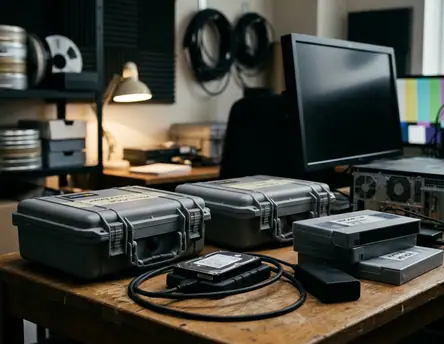
Technical inspection checks image integrity, subtitle and caption timing, audio channel mapping, and aspect ratio. A review copy serves the selection process; the exhibition master must also withstand theatrical playback. Misrouted dialogue or incorrectly framed images can undermine the very choices that earned the invitation.
Projection and technical operations teams coordinate with programmers to match films to suitable screens and sound systems. Screen geometry matters for a scope image. Sound capability matters for a carefully constructed multichannel mix. Venue assignment therefore carries artistic consequences alongside scheduling demands.
The final lock brings the accepted film, its premiere claim, its tested exhibition file, and the public calendar into agreement. That coordination protects the audience’s encounter with the work.
Before entering the first open call, filmmakers should make concise runtime discipline and exhibition-ready technical mastering core parts of their submission strategy.