From Early-2000s Calling Cards to Ten-Minute Stress Tests
Walk into a festival lounge in the early 2000s with an 8-to-12-minute reel, and the conversation followed a predictable script. Programmers and sales agents judged those short blocks as self-contained works. A tight visual poem shot on Super 8 or a clever one-joke drama functioned as an artistic calling card, earning the director a general meeting months later to ask what else they might be writing. The short stood alone; the feature conversation waited for a separate calendar.
Today's financing environment rarely buys patience. Financiers want to see tone, pacing, and lead character dynamics working on screen before they read page one of a deck. Alumni of women-focused film festivals adapted to this shift early. They kept the ten-minute slot they already knew how to program and turned it into a logistical and tonal stress test for a feature screenplay already in hand.
Where an annual study on women in independent film tracks the broader employment baseline across the industry, the day-to-day packaging reality inside festival hubs comes down to execution proof. The tactics below apply specifically to narrative and hybrid directors building micro-to-low-budget independent features planned for 18-to-20-day shoots, rather than studio-track television directors working through agency staffing systems. The debut-short-to-feature run splits into a ten-minute second-act extraction, a same-cycle industry-track registration, and a three-head crew lock carried onto an 18-to-20-day shoot.
Extracting the Second-Act Pivot from a Feature Draft
Writing a standalone short story from scratch eats up a year of production capital that never directly advances a feature script. Alumni who move quickly into production start with a completed or near-complete feature screenplay of roughly 90 to 110 pages and cut a working organ right out of its middle.
The problem with pitching a first-time feature is that lookbooks only prove a director can curate other people's photographs. By extracting a high-tension second-act pivot where the feature's core conflict turns, the director puts the actual visual language and lead dynamic in front of industry programming teams and financiers. They stop guessing how the feature will breathe because they just watched its central crisis play out for ten minutes.
To pull this off without blowing a short budget or confusing public festival audiences, directors filter the feature draft through three strict production conditions:
- One contained location: Keep the extraction inside a single architectural footprint so company moves never eat into the 2-to-3-day shoot.
- Minimal cast: Hold the on-screen ensemble to two to four actors, focusing camera time entirely on the primary emotional friction.
- Autonomous emotional landing: Give the ten-minute cut its own emotional close so a public audience can follow the stakes without reading the surrounding 100 pages.
Super 8 Texture Decisions
When testing an archival or memory sequence for a hybrid feature, run a single cartridge of Super 8 during the two-day short shoot to lock the exact lab scan pipeline and grain structure before pricing the 20-day feature budget.
Synchronizing Public Screenings with Industry Co-Production Markets
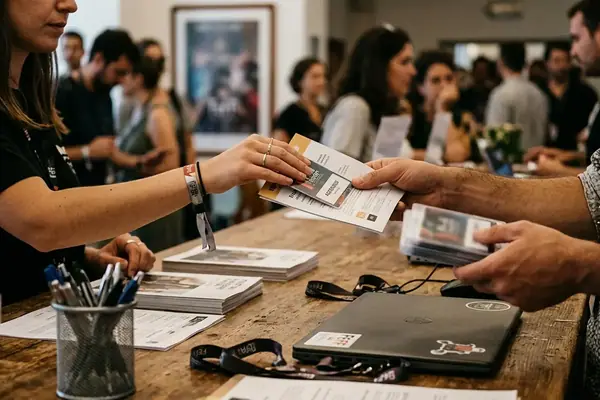
Warm applause after a Friday night screening evaporates by Monday afternoon once industry guests board their flights home. Relying on post-festival email outreach to start a feature conversation leaves the director chasing cold leads across three timezones.
Directors who convert festival runs into greenlights synchronize two submissions in the exact same cycle. While entering the finished ten-minute short into the public festival program, they simultaneously register the feature treatment in the festival's industry development programs, pitch forums, or script labs. Momentum peaks during the week of the premiere. When a producer walks out of the theater praising the short, a complete feature package is already sitting in the festival's industry hub, turning casual hallway compliments into scheduled development meetings while everyone is still on site.
This dual-track approach demands at least six months of dedicated feature-script preparation prior to festival lock. Outside a festival industry development track, and outside narrative or hybrid micro-to-low-budget features, the six-month pre-lock package and the morning-after lobby handoff have no room to operate. Purely public-facing showcases without an attached market or script lab cannot support this simultaneous conversion.
Carrying Three Key Department Heads Across Budget Tiers
Bond companies and independent equity investors look at a first-time feature director's 18-to-20-day shooting schedule and see execution risk. On a schedule that tight, an untested pairing between a director and a newly hired cinematographer can cost half a day in lighting setups before lunch on day one.
Where festival alumni interviews trace financing breakthroughs, lateral crew continuity repeatedly emerges as the deciding risk-mitigation factor. Instead of letting financiers attach unfamiliar department heads from above, directors lock in their short film's core trio early.
Structuring the Three-Head Lookbook Lock
Before taking the first equity meeting, the director names the short's cinematographer, editor, and production designer on the feature lookbook as attached creative partners. Investors who watched the ten-minute short can see the shorthand between those four people right on the screen.
- Draft stepped agreements early: Put deferred or stepped deal memos in place 8 to 12 weeks before the first equity meeting so the attachment is formal on paper.
- Scout during the festival run: Bring the cinematographer and production designer along during the festival dates to break down the feature schedule and scout local textures together.
- Cut assembly tests with the editor: Keep the short's editor involved in pacing revisions on the 90-to-110-page script so the transition from proof-of-concept rhythm to feature structure stays intact.
The 48-Hour Post-Q&A Protocol and Alumni Rough-Cut Circles
The follow-up clock after a screening is set by airport shuttles, not polite industry etiquette. Industry attendees who catch a late-night short block often check out of their hotels the next afternoon. I watch directors lose six months of momentum simply by waiting until the following Wednesday to send a clean link. The working protocol requires delivering the feature lookbook and full screenplay within 48 hours of the Q&A, catching executives before they return to their regular development slates.
That same festival architecture stays active long after the financing closes. Alumni keep their programmer circles and peer-lab cohorts close through production, calling on those trusted eyes for rough-cut notes during the first assembly stretch, roughly 6 to 10 weeks after the feature wraps.
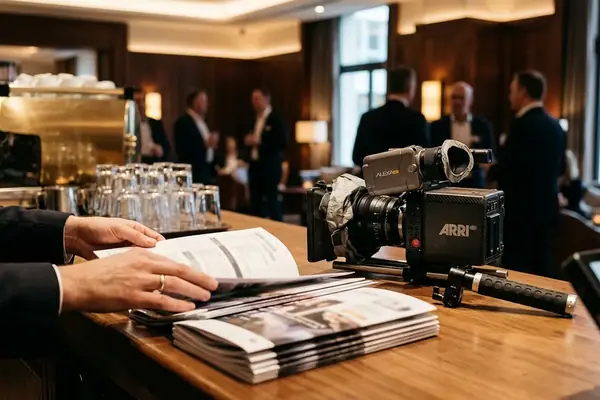
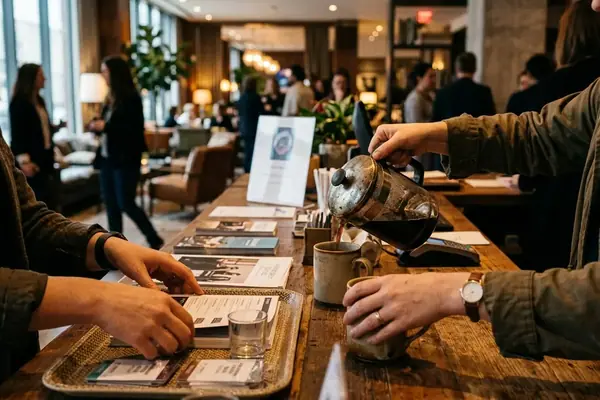
The real work looks quiet. It is 9:00 a.m. in a nearly empty festival venue lobby the morning after a late-night short block. An emerging director sits at a low coffee table between her cinematographer and a development executive who watched their ten-minute extraction twelve hours earlier, spreading a marked-up, 19-day feature shooting schedule across the wood while the lobby espresso machine hisses in the background.