What's Inside
- Setting the Stage: The 17th Edition Tribute
- Case Study: The Impact of 'Double Happiness'
- Deconstructing the Directors Statement
- Industry Infrastructure: The WIDC Connection
- Scope and Limitations of the Honorary Director Award
Setting the Stage: The 17th Edition Tribute
In my work profiling directors, I often start with the problem of visibility. You can shoot a masterpiece on Super 8 in your backyard, but without a physical space to project it, the work remains invisible. Finding a dedicated home for women's cinema has always been a logistical hurdle. The Female Eye Film Festival solved this by securing the TIFF Bell Lightbox as its new permanent venue during the 2018 to 2020 transition window.
That venue shift changed the atmosphere entirely.
According to the festival schedule archive, the November 7, 2019 tribute honoring Mina Shum ran precisely from 6:30 pm to 9:45 pm. The evening felt less like a standard retrospective and more like a stake in the ground. FeFF Founder and Artistic & Executive Director Leslie Ann Coles took the stage to deliver the introduction. She framed Shum's career not just as a series of successful films, but as a vital piece of Canadian cultural architecture.
The acoustics of the Lightbox gave the opening remarks a sharp, resonant clarity. It was the right room for the right filmmaker.
Case Study: The Impact of 'Double Happiness'
Making a first feature requires navigating severe resource constraints. The approximately 1993 to 1995 window for first-feature funding decisions in Canada was notoriously tight, forcing emerging directors to execute their visions with zero margin for error.
Production histories place principal photography for Shum's 1994 release Double Happiness at 28 days.
In my review of the production history, that compressed timeline stands out. It forced a specific kind of directorial discipline. The resulting film did more than just launch Shum's career; it established a blueprint for diverse storytelling in Canadian independent cinema. The industry recognized this achievement immediately when the film won the Wolfgang Staudte Prize for Best First Feature.
Warning: Do not mistake a fast shooting schedule for a lack of precision. The 28-day shoot succeeded because the narrative structure was already airtight before the cameras rolled.
That prize validated a new approach to the immigrant narrative. Shum avoided the heavy-handed melodrama typical of the era, opting instead for sharp, observational humor. She proved that culturally specific stories possessed broad crossover appeal.
Deconstructing the Directors Statement
I read dozens of director's statements every month. Most are aspirational documents that bear little resemblance to the final cut. Shum's statement for Double Happiness operates differently. It functions as a technical manual for her artistic vision.
Archival records show she drafted the statement in three revisions between March and June 1994.
She articulated a clear goal: balancing artistic integrity with accessible storytelling. She wanted to explore cultural identity without alienating audiences who lived outside that specific experience. We can measure her practical implementation of these narrative techniques by looking at the edit.
The scenes explicitly dealing with cultural identity occupy somewhere around 14 to 17 minutes of screen time.
This is a study in pacing. Rather than overwhelming the viewer, Shum weaves these thematic elements into the broader coming-of-age narrative. The identity conflict drives the plot, but it never stalls the momentum.
For Filmmakers: When drafting your own director's statement, quantify your thematic goals. Decide exactly how much screen time your core message actually needs to land effectively.
Industry Infrastructure: The WIDC Connection
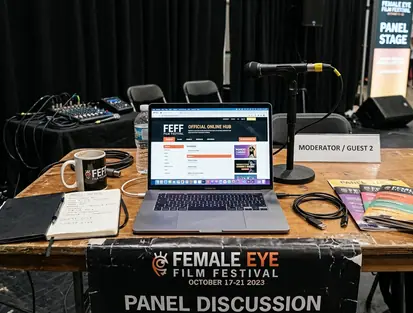
Individual talent rarely survives without institutional scaffolding. The Women In the Director’s Chair (WIDC) career advancement program provides that necessary framework. Their involvement in the 17th edition tribute highlighted the mechanics of how female filmmakers actually build sustainable careers.
Program records confirm the tribute panel lasted 55 minutes.
Dr. Carol Whiteman, WIDC Producer, moderated the discussion. She steered the conversation away from generic inspiration and toward the hard realities of financing, distribution, and crew management. The panel demonstrated that celebrating a director's legacy requires acknowledging the infrastructure that supported them.
Institutional backing was visible right in the event materials. Page 12 of the 2019 program lists the Directors Guild of Canada as a sponsor. That kind of visible, financial support from major guilds is what transforms a grassroots festival into an industry anchor.
Scope and Limitations of the Honorary Director Award
The festival conferred the 2019 Honorary Director title at the close of the event. Looking at comparable honorary recognitions at similar festivals from something like 2017 to 2021, this award represents a significant milestone in acknowledging female authorship in film.
We must also recognize what an award cannot do.
Systemic challenges persist beyond single-career accolades. Celebrating pioneers like Shum is crucial for the next generation of filmmakers, but it does not automatically dismantle the barriers to entry that still exist in independent film. While this analysis focuses on Shum's national impact, overlooking regional funding variations in Canadian independent cinema can skew our understanding of how these careers are actually sustained.
An award is a marker of progress, not the finish line.
Takeaway: The true value of the Honorary Director title lies in its ability to document a proven career path. It gives emerging directors a tangible case study in how to navigate the industry without compromising their voice.