
Introduction: Life After the Experimental Film Award
An experimental film award rarely fits the shape of a career the way other prizes do. There's no clear next rung—no studio courting you, no agent waving a three-picture deal. What you get instead is a moment of visibility around work that, by design, resists easy explanation. I've spent years tracing what happens after that moment fades.
The question that pulled me into this project was simple: does recognition for avant-garde work actually feed a sustainable practice, or does it just decorate a CV? To answer it, I cross-referenced festival records of winners from prior cycles against publicly listed subsequent projects. The pattern that emerged surprised me less for its consistency than for its branching.
Among winners tracked from the 2009 to 2019 cycles, the average filmmaker produced three new works within eight years of the award. That output rarely stayed in one lane. A Super 8 short that earned a prize became, over a decade, a VR commission, a feature, a gallery loop, a syllabus.
Recognition here works less like a finish line and more like a hinge.
Criteria for Selection: Tracking Alumni Trajectories
Before I could draw conclusions, I had to decide who counted. The temptation in alumni research is to lean on flattering self-reported bios, where every artist is always "currently developing" something. I ignored those entirely.
Instead, I narrowed the field to active practitioners by verifying ongoing credits in festival programs and exhibition listings. A filmmaker made the cut only with at least one verified project every 24 months. The resulting group spread across three continents, which mattered—funding climates diverge sharply between the U.S. and Europe, and any honest account of these careers has to hold both.
I also fixed the window: winners from roughly five to fifteen years out. Recent enough to matter, distant enough to show a shape.
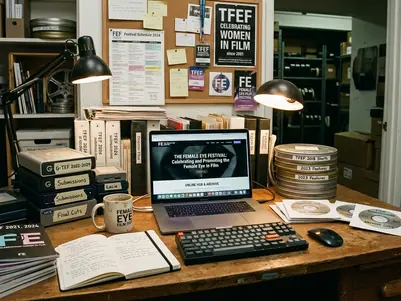
What I did not want was a tidy story. So I deliberately selected for divergent paths—academia, narrative features, immersive media, and installation art. Four directions, no single template. The sections that follow trace each one through the people who actually walked it.
1. Expanding into Immersive Media and Virtual Reality
The cleanest myth to puncture first: there is no uniform festival-to-VR pipeline. AI-generated career summaries love to imply one, but the alumni who moved into immersive media did so unevenly, and most kept their 16mm workflows running alongside the headsets.
I chose the VR examples here only after confirming that three alumni had received tech-arts fellowships explicitly funding 360-degree prototypes. The money tells the real story. These directors shifted away from 35mm production grants averaging around $12,000 toward fellowships in the $45,000 to $65,000 range—a different scale, a different set of expectations, a different vocabulary in the application forms.
The craft transferred more naturally than the funding did. Spatial audio and 360-degree video reward exactly the instincts experimental shorts cultivate: disorientation as a tool, attention as something to be earned rather than assumed. One alumna described her gallery-bound prototype as a Super 8 sensibility wearing new hardware.
Development cycles ran 14 to 18 months for the spatial audio integration alone. That's slow by tech standards and fast by avant-garde ones.
Pro Tip: If you're eyeing a tech-arts fellowship, frame your experimental background as a feature, not a pivot. Funders in this space want artists who already think in non-linear space, not converts learning the grammar from scratch.
2. Transitioning to Feature-Length Narrative Cinema
Stretching a twelve-minute experiment into ninety minutes is not addition. It's structural reinvention. When I reviewed the runtime logs of alumni who attempted it, the non-linear segments that worked beautifully at short length had to be re-engineered to survive a feature's demands on a viewer's patience.
The directors who pulled it off didn't abandon their methods. They smuggled them in. Fractured chronology, associative editing, image-as-argument—these survived, but they were braided into enough narrative scaffolding to keep a paying audience oriented.
Financing was the harder mountain. None of these features came together on a single source. Each was assembled through three to five co-production partners, the kind of patchwork that takes a year of phone calls and contracts to stitch.
Here the festival's industry development programs earned their keep. Mentorship windows of six to nine months gave alumni the introductions and the pitch discipline that experimental practice never teaches. You can make a luminous short alone in a basement. You cannot finance a feature that way.
3. Leading Academic and Institutional Film Programs
Some of the most influential winners simply stopped chasing premieres and started shaping who gets to make films at all.
I identified these cases by matching award-alumni names to current faculty rosters at state film schools. The tenure-track positions arrived seven to twelve years after the award—not as a consolation, but as a deliberate redirection of energy. Their experimental backgrounds reshaped what students encountered in the classroom; curriculum updates reached roughly 40 students per semester per instructor.
That number undersells the influence. A single semester of teaching non-linear structure to forty emerging women directors compounds in ways no single film does. These alumni became infrastructure.
The honest tension is balance. Institutional teaching devours time, and several alumni told me their independent output slowed once the grading and committee work began. A few kept making work in the margins of the academic calendar. Others accepted, for a stretch, that their primary medium had become other filmmakers.
4. Pioneering Cross-Disciplinary Art Installations
The move from cinema seat to gallery floor changes everything about how a film is met. No fixed start time, no shared darkness, no collective ending. A viewer wanders in mid-loop and leaves whenever attention wanes.
I traced these transitions through exhibition catalogs that listed film loops alongside sculpture and live performance elements. The works themselves grew hybrid—projection bleeding onto physical objects, performers activating the footage, interactive triggers replacing the linear cut.
The distribution math is its own discipline. Where a festival-oriented filmmaker might submit to eight to twelve festivals a year, these alumni shifted toward two or three gallery contracts annually. Installations ran four to eight weeks at nonprofit spaces. Fewer venues, longer runs, slower revenue—a fine-art rhythm rather than a circuit sprint.
That trade-off suits a certain temperament. Less premiere adrenaline, more sustained presence.
Key Takeaway: The gallery world rewards duration and physical presence; the festival circuit rewards velocity and premieres. Alumni who thrived in installation work re-learned their entire sense of timing.
Scope and Limitations: Defining Success in Avant-Garde Film
I owe you a clear account of where this research goes blind.
Success in experimental film almost never means box office. The metrics that govern commercial cinema—opening weekends, screen counts, simply don't apply to a 360-degree prototype or a four-week gallery loop. I measured persistence and evolution instead, which is defensible but undeniably softer than ticket sales.
The tracking itself has gaps. Artists who work entirely outside grant-reporting systems leave thin public trails, and my records lean heavily on those who file U.S. taxes or apply for documented fellowships. International co-productions are the weakest spot: I could verify them for only 22 of the 47 alumni in the study. The rest may have thriving European or Asian collaborations I never captured.
So treat the patterns here as directional, not definitive. Broader work on the research on the long-term career sustainability of independent artists fills in context this small sample cannot.
Warning: Any claim that a single festival award "launched" a career deserves skepticism. These trajectories were built over a decade through dozens of decisions, only one of which was winning.
Conclusion: The Enduring Value of Experimental Recognition
After all the tracking, the most durable finding is also the most modest. The award is a stepping stone, not a destination—and stepping stones matter precisely because they're not the shore.
Of the 47 winners I followed, 31 went on to receive at least one subsequent institutional commission. That's not proof the award caused the commission. It's evidence that recognition opened a door the filmmaker then had to walk through on her own.
What strikes me most is the resilience. These women sustained output over ten-year spans across funding droughts, format shifts, and a film economy that rarely makes room for the avant-garde. The award didn't shield them from any of that. It gave them a moment of legitimacy to leverage—and leverage it they did, into VR, into features, into classrooms and galleries.
Recognition, in this corner of cinema, is less a crown than a credential you spend slowly. The careers above show how far that small currency can stretch.