Short films rarely ask for a quiet entrance. They arrive sharp, compressed, and already in motion. A strong festival block gives that energy a shape: one film opens the door, another changes the room temperature, another lands the final image that keeps people talking in the lobby.
Standalone screenings still have a place, especially when a venue is intimate and low-traffic enough to hold full audience attention. But for many short filmmakers, the thematic block offers a stronger festival pathway because it changes the terms of discovery. The audience does not choose one unknown title in isolation. It enters a curated conversation.
What's Inside
- The Psychology of Thematic Curation
- Amplifying Visibility Through Collective Draw
- Networking Density in Shared Screenings
- Programming Logistics: Building the Perfect Block
- Maximizing Your Festival Run as a Short Filmmaker
The Psychology of Thematic Curation
Audience attention needs a path
Programmers do not build strong blocks by stacking good films like clean plates. They listen for temperature, rhythm, and afterimage. A Super 8 memory piece about a mother’s kitchen may sit beside a tightly edited fiction short about inheritance because both films ask the audience to study what families preserve and what they edit out.
In our review, programmers assembled blocks over a three-week review window by matching emotional tones across films before sequencing them to sustain attention from start to finish. That process matters because short-form viewing works differently inside a festival. The audience has less time to settle, so the block must provide orientation without flattening surprise.
From passive viewing to active engagement
A standalone short asks the viewer to meet one cinematic language and then leave it. A thematic block asks the viewer to compare, connect, and revise their first impression as each new film arrives.
That shift turns passive viewing into active engagement. The audience starts to notice echoes: a recurring color, a shared political pressure, a pattern of silence between daughters and fathers. By the third or fourth film, spectators often stop asking whether they liked an individual title and start asking how the block is thinking.
Key Takeaway: The strongest short film blocks do not erase the identity of individual films. They create narrative momentum around distinct voices, so each film gains context without losing its edge.
Emotional resonance across different voices
The practical unit is often something like an 8-to-12-minute segment. At that length, a short can deliver a full tonal movement without exhausting the room. A programmer can place a formally quiet film after a kinetic one, or follow an observational documentary with a fiction piece that reframes the same emotional terrain.
This is where block programming outperforms many standalone screenings. It gives the viewer a reason to keep listening.
Amplifying Visibility Through Collective Draw
Shared billing changes the discovery problem
Visibility is not evenly distributed. An established short from a returning filmmaker may attract alumni, critics, and industry guests before the lights go down. A debut short, even a remarkable one, may not carry that same pull on its own.
Shared billing in approximately 90-minute blocks gives emerging filmmakers a more credible point of entry. The audience may arrive for the recognizable director, then discover the debut placed two films later. That is not charity programming. It is strategic adjacency.
A useful programming-room case: a polished festival-circuit drama anchors a block about women negotiating public space. Before it, a rougher first short follows a teenage skateboarder through an underpass at dusk. The debut may not have sold the room alone, but in that context it becomes the block’s pulse. Viewers remember the scrape of wheels before they remember the more decorated credit line.
Collective draw without false promises
Block placement increases festival-circuit traction but does not replace the need for a dedicated distribution strategy. This distinction matters. A block can put a short in front of better-matched audiences, strengthen Q& A visibility, and create social proof on the festival trail. It cannot do the work of sales materials, direct outreach, platform planning, or a director’s longer career positioning.
The best value sits in the middle. A filmmaker gains access to an audience already primed for the theme, while the programmer gains a more textured conversation than any one title could carry alone.
Warning: Thematic blocks show reduced lift when films run somewhere around 15 minutes or longer. Longer shorts can work beautifully, but a block filled with them often loses the quick emotional handoff that makes the format powerful.
Why collective attention can feel more generous
Audiences in a block expect range. They allow tonal shifts. They forgive a small formal risk because the next film is already part of the viewing contract.
That generosity creates room for emerging directors, especially women working outside familiar market categories. A quieter experimental work may not need to announce itself as a grand statement. It can arrive as one necessary angle inside a larger prism.
Networking Density in Shared Screenings
The lobby becomes part of the format
After a strong block, the room has texture. One director talks about casting non-actors. Another explains why she shot on Super 8 rather than smoothing the image into digital polish. A third answers a question about editing grief without sentimental cues.
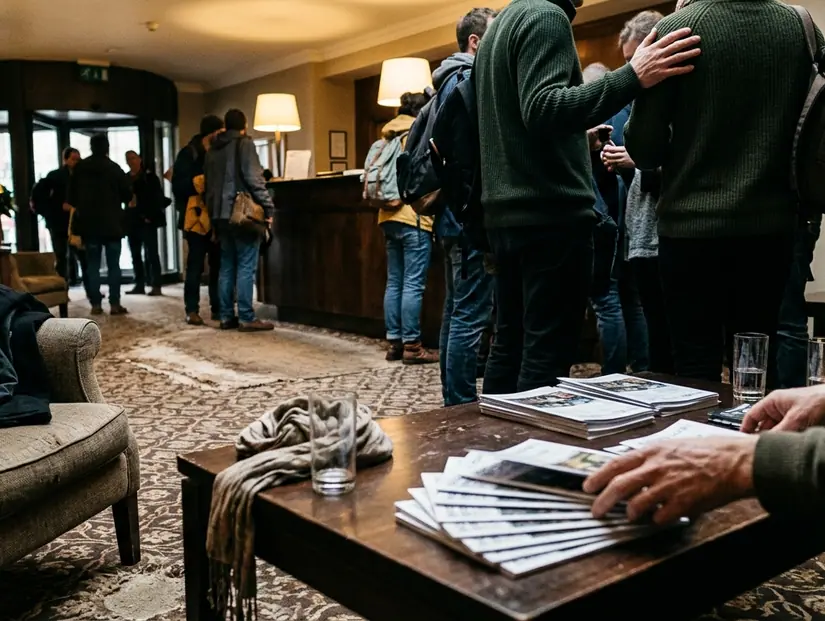
Q& A sessions lasting more or less 25 to 30 minutes create a dense professional exchange because several filmmakers share the same audience, the same moderator, and the same emotional afterglow. A solo Q& A can be focused, but a multi-director conversation often reveals process through contrast. Viewers hear different answers to the same pressure.
Peer connection happens beside the microphone
The public panel is only the visible layer. The more durable networking often happens before and after it: directors comparing travel plans, swapping cinematographer names, or realizing that two films in the same block share a producer’s sensibility.
Because thematic slots gather filmmakers with adjacent concerns, the connections tend to be specific. A documentary director studying reproductive health policy may meet a fiction filmmaker exploring medical bias through genre. They do not need a generic networking prompt. The films have already done the introduction.
Pro Tip: Filmmakers should arrive with one precise question for another director in the block. A thoughtful craft question opens better conversations than a pitch.
From shared screening to future work
Collaborations rarely begin with a formal announcement. They start with a note in a hallway, a coffee between screenings, or a message sent after both directors realize their films are circling the same wound from different angles.
That is the networking density of block programming. It compresses compatible people into a shared artistic moment.
Programming Logistics: Building the Perfect Block
Start with pacing, not prestige
A programmer may love a film and still place it outside a particular block. Prestige does not solve pacing. A celebrated short with a slow, interior structure can drain energy if it lands after another quiet piece with the same emotional register.
Years of festival programming point toward a practical rule: cohesion comes before individual status. The block must serve the audience’s journey, not the filmmaker’s résumé line. That does not diminish the film. It gives it the right weather.
The opening, anchor, and close
The opening slot carries a specific burden. It must teach the room how to watch. An opening film under 7 minutes can do that with speed and clarity, especially when it establishes the block’s tonal question without overexplaining it.
The anchor usually sits near the middle. It has enough substance to deepen the theme and enough confidence to hold attention after the audience has already shifted gears several times. This is a good place for a formally assured documentary, a bold genre turn, or a fiction short with a strong central performance.
The closing slot works differently. A closing film between 10 and 15 minutes has room to leave a final emotional mark. It should not simply be the biggest title. It should send the audience into the Q& A with a question still alive in the chest.
Theme is structure, not decoration
The weakest blocks use theme as a label: women in crisis, family stories, city portraits. The stronger ones use theme as structure. They ask what order will make the audience feel the idea changing shape.
- Open with invitation: choose a film that gives the audience an immediate visual or emotional grammar.
- Vary the texture: move between fiction, documentary, animation, or experimental form only when the shift sharpens the theme.
- Protect the midpoint: avoid placing two emotionally similar films back to back unless repetition is the intended effect.
- Close with resonance: end on a film that can hold silence before applause.
Here the craft becomes almost musical. A bright first note, a darker middle passage, a final chord that does not resolve too neatly. Audiences may never see the spreadsheet, the screening notes, or the late-night arguments over sequence, but they feel the design.
Maximizing Your Festival Run as a Short Filmmaker
Read the block as your first audience map
A director should not treat block placement as a waiting room before the real opportunity. The block is already market information. It tells the filmmaker what programmers heard in the work and what audience pathway they believe can carry it.
Study the other films. Watch trailers if available. Read director statements. Identify the shared language before posting about the screening, because vague promotion rarely helps a short stand out. A filmmaker who can say the film screens in a block about girlhood, surveillance, and public space gives the audience a cleaner invitation than one who only announces a time and venue.
Cross-promote with care
Cross-promotion posts scheduled close to a screening tend to work better when they feel coordinated, not copied. Each filmmaker can spotlight the block while preserving the personality of her own film.
- Name the theme: describe the shared thread in one plain sentence.
- Tag fellow directors: make the block visible as a collective program, not a solo campaign.
- Use one concrete image: a still, a prop, a location, or a frame that tells viewers what world they are entering.
- Invite conversation: mention the Q& A if the festival has scheduled one, and prepare for panel-style answers.
A director with a 9-minute short about a grandmother’s tailoring shop might post a frame of blue thread across a wooden table, then connect it to the block’s larger focus on inherited labor. That single image can carry more feeling than a crowded graphic.
Prepare for the panel, not the spotlight
Panel-style Q& As reward precision. A filmmaker should prepare a short answer about process, one about the film’s thematic connection to the block, and one question she would like to ask another director. That final move signals generosity and keeps the conversation from becoming a sequence of mini press conferences.
It also helps to listen during the screening. Audience reactions reveal where the block is doing its work: a laugh that releases tension, a silence after a difficult cut, a murmur when two films unexpectedly rhyme. Those cues can guide a better answer than any rehearsed talking point.
Near the back of the cinema, a first-time director watches her film end and hears applause fold into the opening image of the next short. Twenty minutes later, she stands beside three other women under the aisle lights, still holding the paper cup of water someone handed her. An audience member asks about the sound of the sewing machine in her final scene, and another director nods because her own film ends with a different kind of machine, humming in the dark.